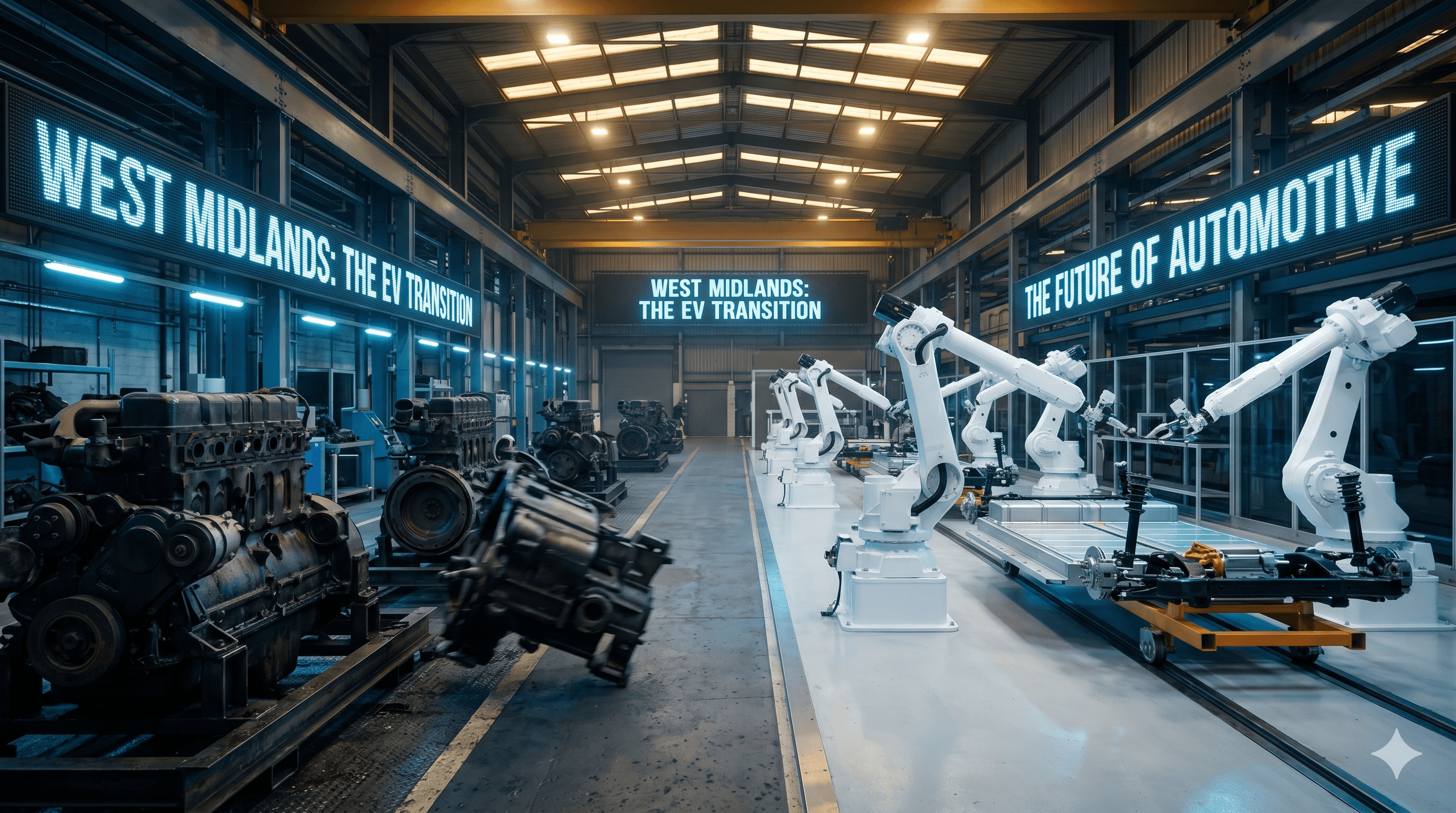
West Midlands & The EV Transition
Walk onto any historic shop floor in the West Midlands right now. The air smells different. For decades, this region was the beating heart of British automotive, pounding out the heavy iron gears and exhaust systems of internal combustion engines. Today, we are ripping out those legacy machines and wiring up the high-voltage nervous systems of electric vehicles (EVs). But while the robotic arms on the assembly line are state-of-the-art, the way we manage the parts feeding those machines is stuck in a 1990s traffic jam.
Let me give you a simple scenario. Imagine trying to bake a complex, multi-tier wedding cake. The flour arrives on Tuesday, the eggs show up on Thursday, but your oven is only scheduled to turn on for a strict one-hour window on Wednesday. Nothing aligns. You end up with a ruined kitchen and no cake.
This is exactly what is happening in the EV transition right now. Moving from gas to electric means swapping 2,000 moving engine parts for massive battery packs, complex inverters, and miles of copper pipes. You have to orchestrate hundreds of new vendors who have never worked together before. Yet, how are automotive giants managing this massive shift? With a fragile web of emailed spreadsheets.
Let me ask you a direct question: Are your highly trained engineers building cars, or are they just acting as "Human Glue"?
I walk into multi-million-pound facilities and see brilliant mechanical minds acting as "Data Janitors." They spend their mornings sweeping up messy data, chasing down suppliers on the phone, and manually typing numbers into a master document just to figure out if a shipment of lithium-ion cells cleared customs.
This reliance on "Synchronous Logic"—the dangerous assumption that Supplier A will remember to email Supplier B before Supplier C can start assembling the chassis—is why your factory floor keeps grinding to a halt. When you rely on synchronous human actions to move critical data, one sick day or one corrupted file shuts down the entire line. You aren't operating a factory; you are operating a casino.
We need to build a digital engine that matches the precision of the physical vehicles we are producing. To scale EV production across the West Midlands, you have to govern the flow of information with the exact same rigor you use to torque a bolt on a suspension system.
💎 Spreadsheet Reality vs. Peppasync Reality
| Operational Focus | Spreadsheet Reality | Peppasync Reality |
|---|---|---|
| Data Flow | Manual updates pushed through a traffic jam of Friday afternoon emails. | Continuous, automated pipes moving data exactly when and where it is needed. |
| Error Handling | A supplier accidentally deletes a row, halting the entire battery assembly line. | Clean, validated data is injected directly into your production engine. |
| Role of Your Team | Acting as "Human Glue" to manually patch over supply chain blind spots. | Managing strategic exceptions and working to scale the factory output. |
| Visibility | Hoping the file named "Q3_Battery_Orders_Final_v4.xlsx" is accurate. | A transparent, governed system. A factory that finally works. |
We don't sell software; we sell a factory that finally works.
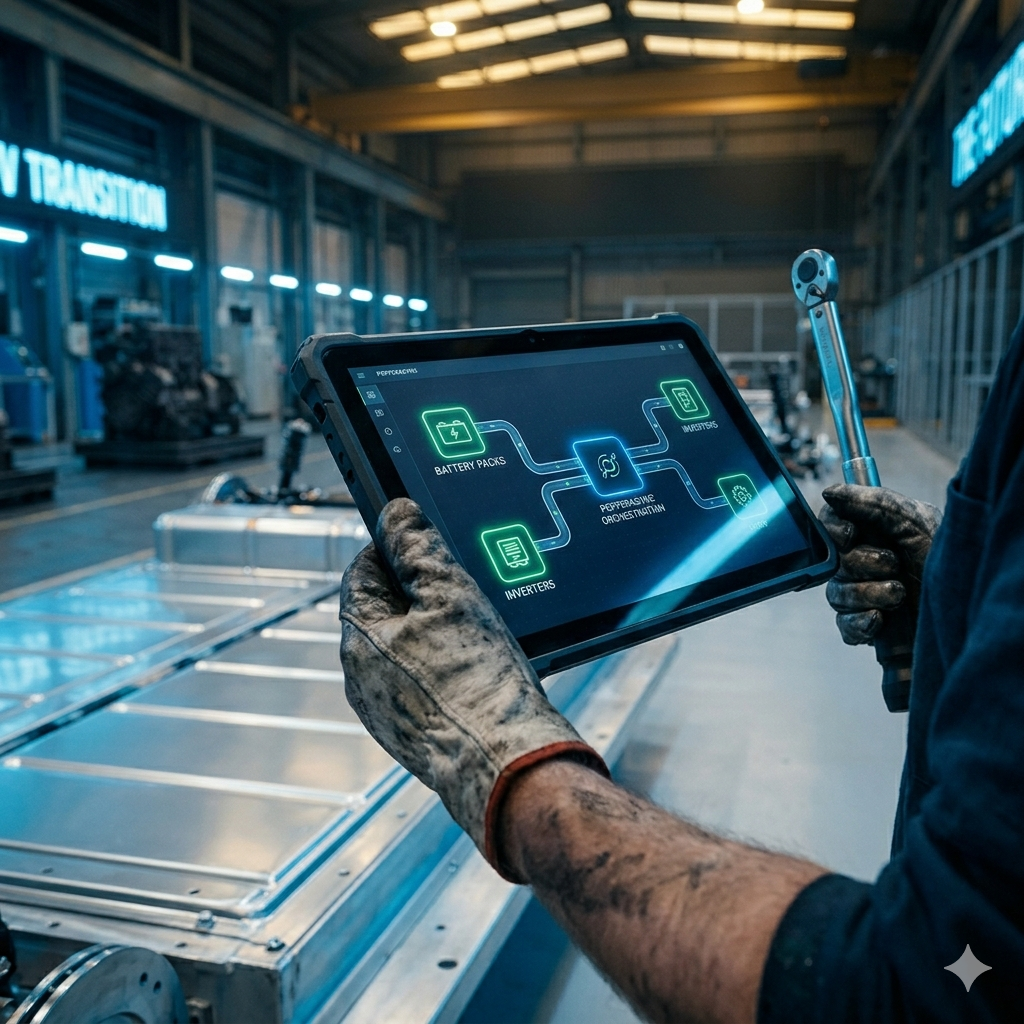
At Peppasync, we look at your supply chain the way an electrical engineer looks at a circuit board. If the current can't flow, the machine is dead. The West Midlands has the engineering talent, the heritage, and the infrastructure to lead the global EV transition. But you cannot build the vehicles of tomorrow using the fragile data tools of yesterday.
You must stop patching the holes in your supply chain with human effort. It is time to lay down solid data pipes, orchestrate your vendor networks, and inject reliability into your operations. Only then can you stop cleaning up data messes and actually get back to building the future.