CBAM & The Electric Scrap Heap
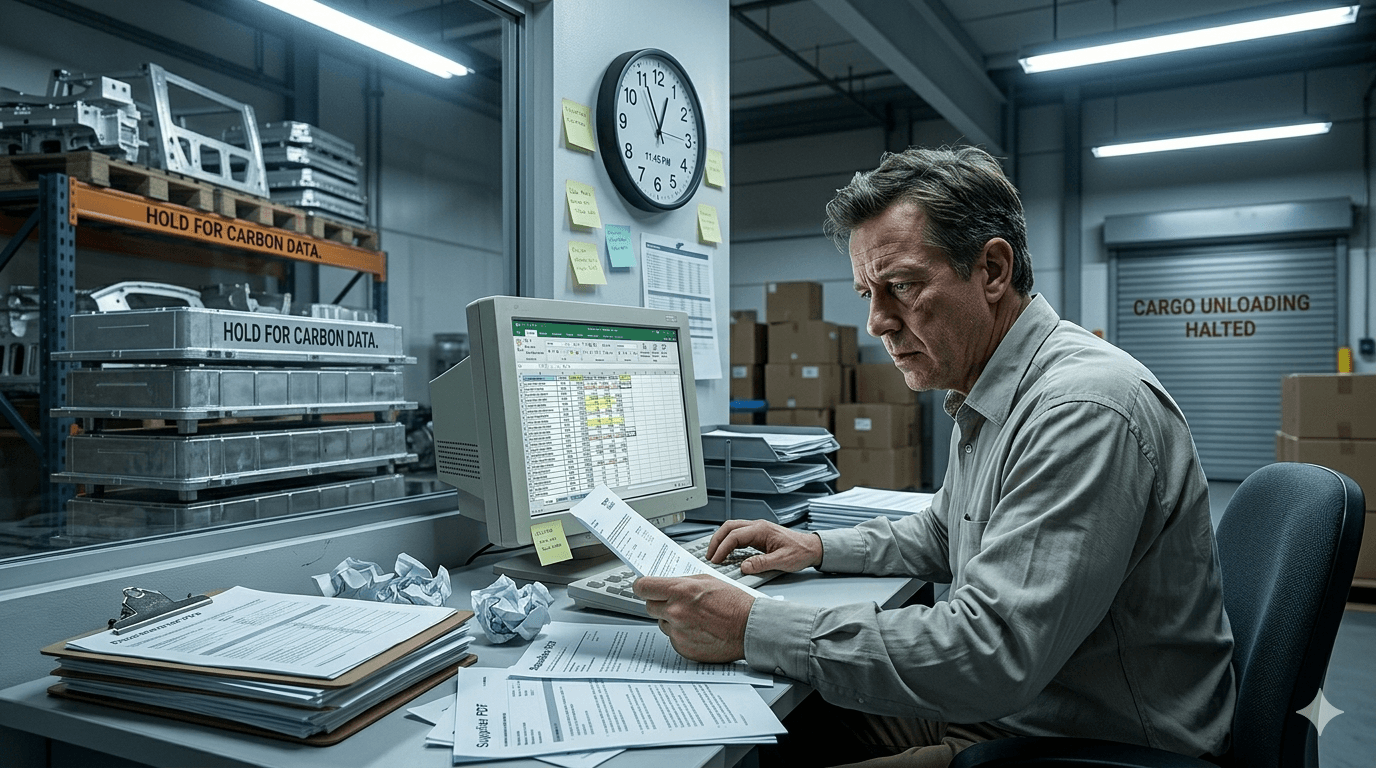
Walk onto the receiving floor of a modern electric vehicle plant. You will see pallets of aluminum battery casings stacked to the ceiling. Mechanically, they are flawless. Financially, they are ticking time bombs.
Why? Because of a new tollbooth called CBAM—the Carbon Border Adjustment Mechanism.
Let me explain this the way I explain it to my grandmother: If you bake a cake and want to sell it at the local market, the market organizers now demand to know exactly how much smoke your oven made. If you can’t prove the smoke level, or if your oven was too dirty, they charge you a massive fee just to set up your stall. For EV makers, the "cake" is the car, the "smoke" is carbon emissions, and the market is the European Union.

Most automotive executives look at this and think they have a compliance problem. They don't. They have a broken plumbing problem.
Right now, tracking the carbon footprint of a steel chassis or an aluminum bracket relies on a decaying infrastructure of emails, PDFs, and frantic phone calls. A tier-three supplier in Asia sends a spreadsheet. A tier-two supplier in Mexico copies half of those numbers into another spreadsheet. By the time the parts arrive in Germany, the data pipeline is completely clogged. Parts physically arrive at customs, but the carbon data is nowhere to be found.
Look at your current operations. Are your highly trained mechanical engineers designing better drivetrains, or are they working as Data Janitors, cleaning up messy supplier spreadsheets? Are your procurement managers acting as the Human Glue, desperately trying to stick together missing carbon reports just to get parts unloaded off a cargo ship?
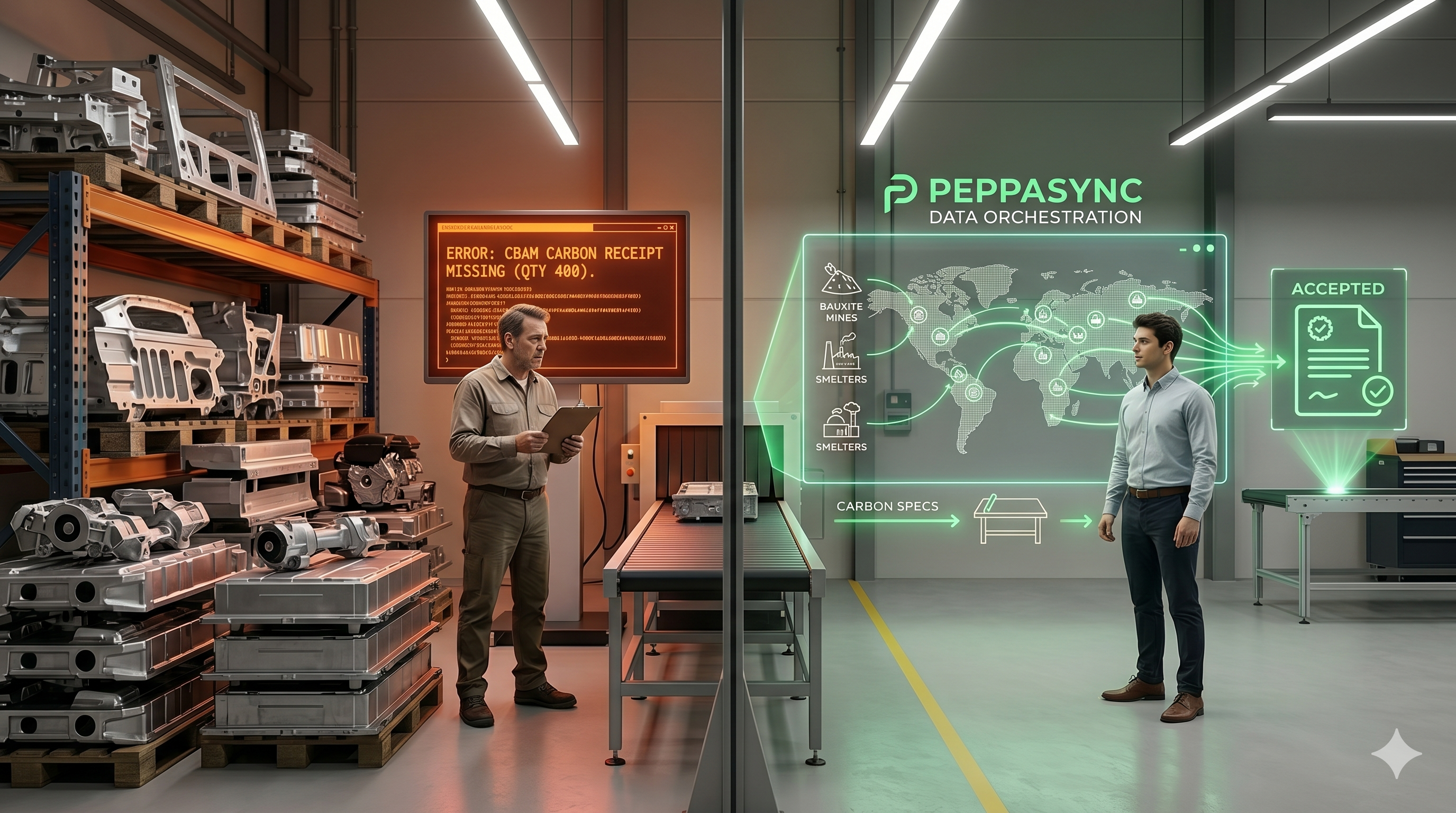
If your team is waiting for a supplier to finish their monthly carbon report before they can calculate the vehicle's total footprint, you are trapped in Synchronous Logic. You are demanding that one gear stops turning entirely before the next gear is allowed to move. You are running a modern assembly line on a dial-up connection, creating a massive traffic jam in your supply chain. When parts can't clear customs because the carbon receipts are missing, those parts sit in warehouses. They degrade. They get replaced. What was supposed to be the future of green transport quietly turns into an expensive, undocumented electric scrap heap.
We don't sell software to fix this. We sell a factory that finally works.
You must stop hoping suppliers will eventually figure it out and instead inject strict accountability directly into your supply chain pipes. You have to orchestrate the flow of data so it moves as seamlessly as the physical parts on the conveyor belt. When an aluminum bracket is stamped, its carbon footprint must be stamped into your data engine simultaneously.
The Carbon Tracking Reality Check
| Feature | Spreadsheet Reality | Peppasync Reality |
|---|---|---|
| Data Collection | Engineers act as Data Janitors, chasing suppliers for PDFs. | System governs automated data pipes from supplier to assembly line. |
| Process Flow | Human Glue holds broken compliance processes together. | Carbon data flows automatically alongside physical inventory. |
| Timing | Trapped in Synchronous Logic; waiting on end-of-month reporting. | Real-time orchestration; emissions are calculated as parts move. |
| Border Control | Parts sit in customs while managers scramble for carbon receipts. | CBAM documents are generated and validated before the ship leaves port. |
When you govern your data properly, you stop paying the "disorganization tax." You don't have to guess the embedded carbon of your materials or cross your fingers when the shipping container hits European shores.
To scale EV production profitably under CBAM, you must treat carbon data with the exact same rigor you apply to physical engineering. If an aluminum bracket is missing a bolt, it fails quality control and doesn't go in the car. If that same bracket is missing its carbon data, it should fail data control before it even leaves the supplier's loading dock.
Build the engine right. Fix the pipes. Ensure your electric vehicle doesn't become a financial liability before it ever touches the road.